Entry № 029
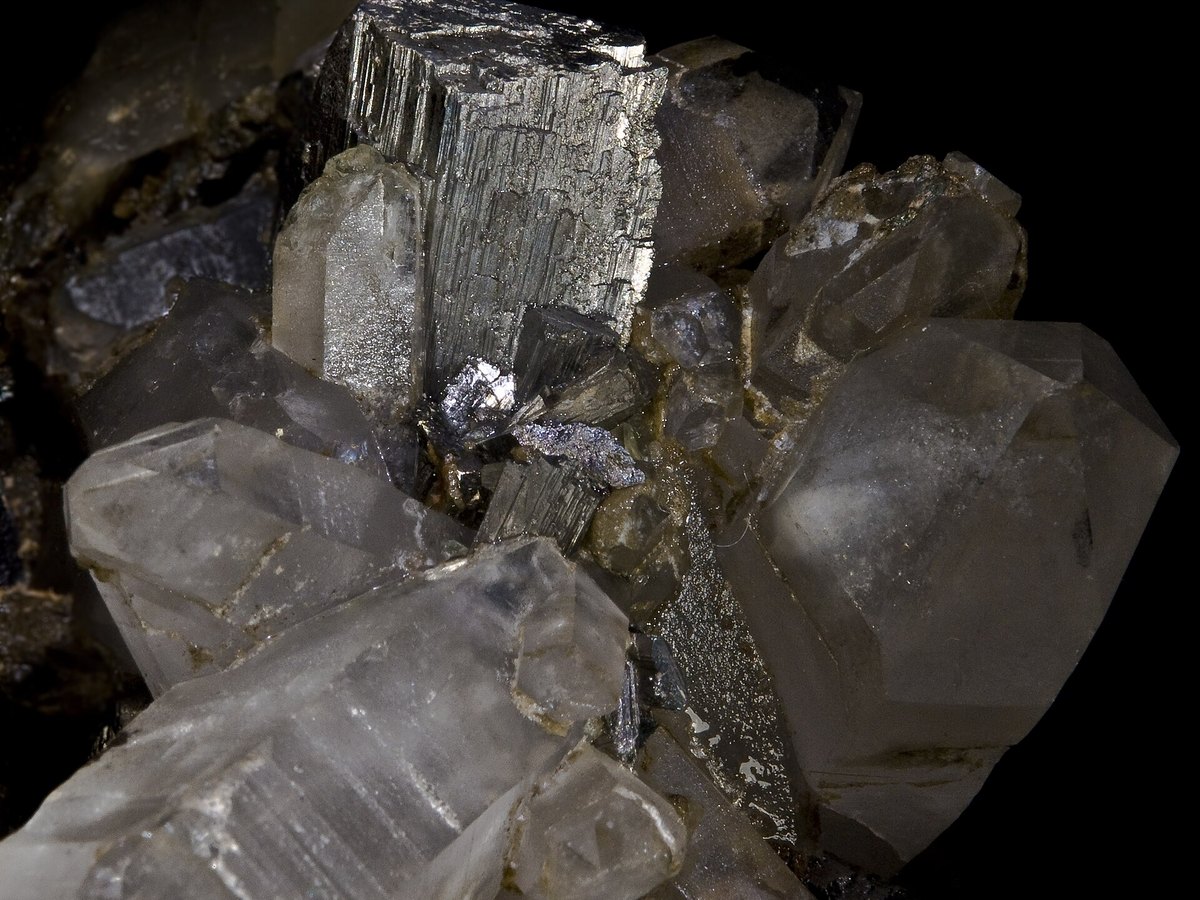
Arsenopyrite
Iron Arsenic Sulphide
Bright metal with a warning in it.
Chakra
Root
Element
Earth · Fire
Zodiac
Aries · Scorpio
I. The Metaphysical Reading
How the stone has been held.
Arsenopyrite is traditionally treated as a stone of protective vigilance and clear naming. Practitioners keep it at the edge of a workspace rather than close to the body, associating its bright faces with the recognition of unhelpful presence and its inner arsenic with the caution the recognition then requires.
- Chakra
- Root
- Element
- Earth · Fire
- Zodiac
- Aries · Scorpio
- Keynote
- Bright metal with a warning in it.
II. The Scientific Reading
What the lattice actually does.
Arsenopyrite is the most abundant arsenic-bearing mineral in the crust and the primary ore of arsenic. It crystallises in prismatic monoclinic forms that often show near-orthorhombic pseudosymmetry, and gives off a distinctive garlic odour when struck due to arsenic volatilisation. Historically a gangue mineral in gold and tin deposits, its presence often signals nearby precious-metal mineralisation.
- Formula
- FeAsS
- System
- Monoclinic (pseudo-orthorhombic)
- Hardness
- 5.5 – 6 (Mohs)
- Provenance
- Germany, UK (Cornwall), Portugal, Bolivia, Mexico, Canada
References & Sources
Independent mineralogical references used to verify the scientific details above.
Mineral Profile
Fact Sheet
- Chemical Formula
- FeAsS
- Crystal System
- Monoclinic (pseudo-orthorhombic)
- Mohs Hardness
- 5.5 – 6 (Mohs)
- Density
- 6.07 g/cm³
- Refractive Index
- Opaque (metallic)
- Provenance
- Germany, UK (Cornwall), Portugal, Bolivia, Mexico, Canada
- Color Origin
- Silver-white to steel-grey with metallic lustre, tarnishing to bronze
Related Crystals
Stones that share this lattice
Next in the Atlas
Asphaltite
The slow stone that was once life.