Entry № 126
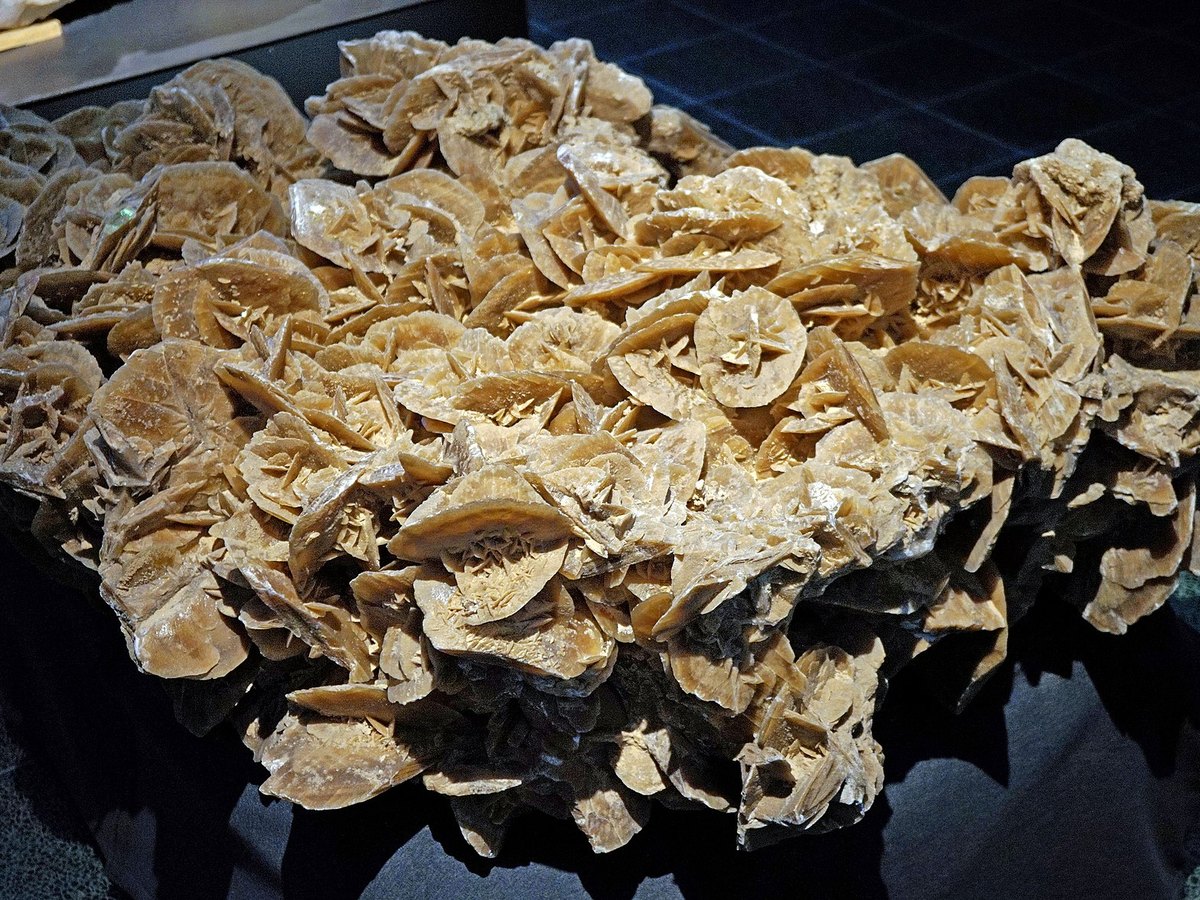
Desert Rose
Rosette Selenite / Barite with Sand Inclusions
A flower crystallised from arid patience.
Chakra
Root · Crown
Element
Earth
Zodiac
Taurus
I. The Metaphysical Reading
How the stone has been held.
Desert Rose is worked with as a stone of quiet self-shaping, kept nearby during solitary practice, retreat and the slow disciplines that only bloom for their maker. Practitioners hold it as a reminder that some flowers open once and never again.
- Chakra
- Root · Crown
- Element
- Earth
- Zodiac
- Taurus
- Keynote
- A flower crystallised from arid patience.
II. The Scientific Reading
What the lattice actually does.
Desert Rose forms when gypsum (selenite) or barite crystallises in arid, shallow salt basins, incorporating loose sand grains into its bladed structure as it grows. Each rosette is a single mineral aggregate whose 'petals' are curved crystal plates locked around included quartz sand.
- Formula
- CaSO₄·2H₂O (gypsum) or BaSO₄ (barite) with sand grains
- System
- Monoclinic (gypsum) / Orthorhombic (barite)
- Hardness
- 2 (gypsum) – 3.5 (barite)
- Provenance
- Mexico (Chihuahua), USA (Oklahoma), Morocco, Tunisia, Algeria, Australia
References & Sources
Independent mineralogical references used to verify the scientific details above.
Mineral Profile
Fact Sheet
- Chemical Formula
- CaSO₄·2H₂O (gypsum) or BaSO₄ (barite) with sand grains
- Crystal System
- Monoclinic (gypsum) / Orthorhombic (barite)
- Mohs Hardness
- 2 (gypsum) – 3.5 (barite)
- Density
- 2.32 – 4.48 g/cm³
- Refractive Index
- 1.520 – 1.648
- Provenance
- Mexico (Chihuahua), USA (Oklahoma), Morocco, Tunisia, Algeria, Australia
- Color Origin
- Sandy tan to golden bladed rosettes resembling flower petals
Related Crystals
Stones that share this lattice
Next in the Atlas
Diamond
Carbon reorganised by the deep mantle into pure fire.