Entry № 159
Glendonite
Calcite Pseudomorph after Ikaite
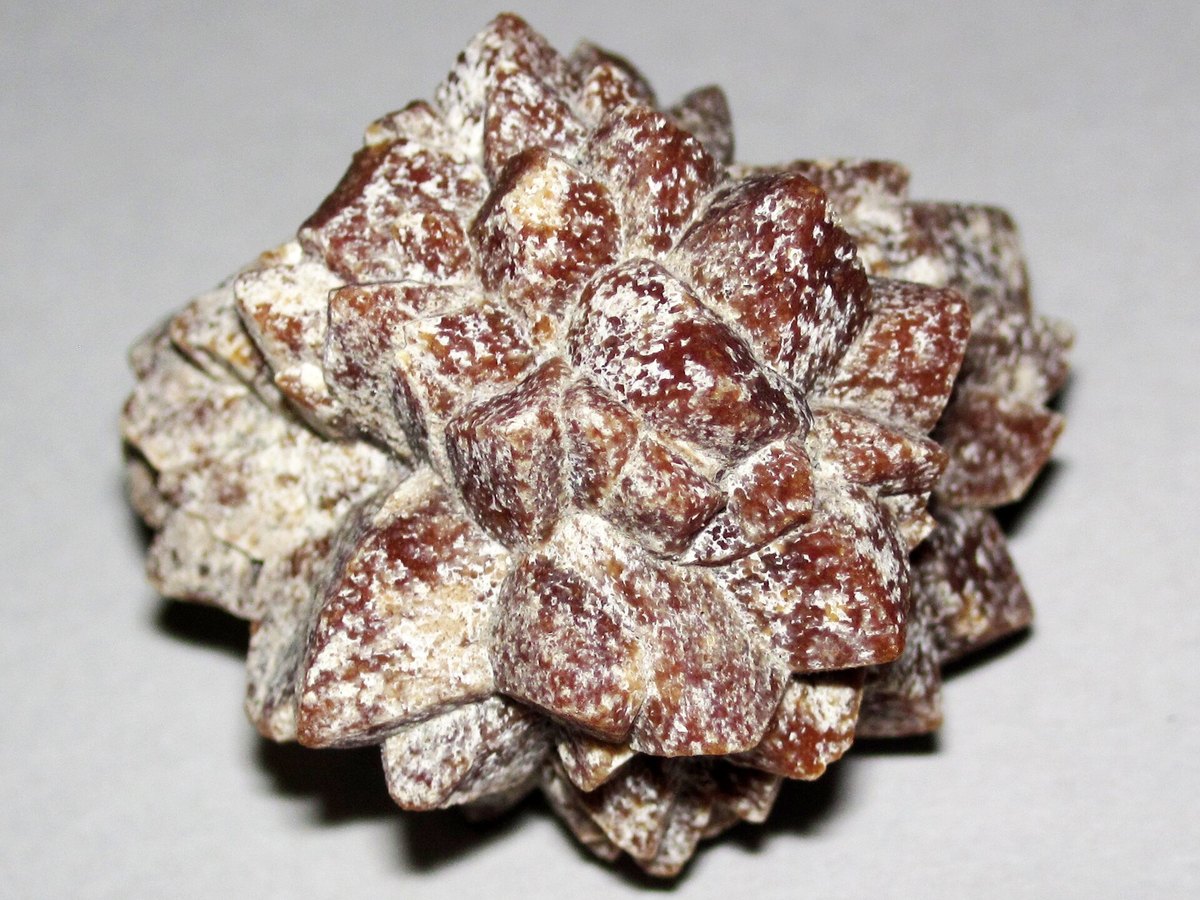
A star of calcite where a cold-water mineral once grew.
Chakra
Crown · Third Eye
Element
Water · Earth
Zodiac
Scorpio · Pisces
I. The Metaphysical Reading
How the stone has been held.
Glendonite is worked with as a stone of preserved memory, kept in the studio during ancestral work, grief practice and any ritual that holds the shape of what is no longer here. Practitioners hold it as a reminder that a form can outlast the substance that first held it.
- Chakra
- Crown · Third Eye
- Element
- Water · Earth
- Zodiac
- Scorpio · Pisces
- Keynote
- A star of calcite where a cold-water mineral once grew.
II. The Scientific Reading
What the lattice actually does.
Glendonite is a calcite pseudomorph after ikaite (CaCO₃·6H₂O), a hydrated calcium carbonate that only crystallises at temperatures near freezing. As sediments warm, ikaite decomposes and calcite grows in its place, preserving the original star-shaped habit. Glendonites are important palaeoclimate indicators for cold marine bottom-water conditions.
- Formula
- CaCO₃ (after CaCO₃·6H₂O)
- System
- Trigonal (pseudomorphous after monoclinic)
- Hardness
- 3 (Mohs)
- Provenance
- Russia (White Sea, Olenitsa River), Australia (New South Wales — Glendon, type locality), Denmark (Greenland)
References & Sources
Independent mineralogical references used to verify the scientific details above.
Mineral Profile
Fact Sheet
- Chemical Formula
- CaCO₃ (after CaCO₃·6H₂O)
- Crystal System
- Trigonal (pseudomorphous after monoclinic)
- Mohs Hardness
- 3 (Mohs)
- Density
- 2.71 g/cm³
- Refractive Index
- 1.486 – 1.658
- Provenance
- Russia (White Sea, Olenitsa River), Australia (New South Wales — Glendon, type locality), Denmark (Greenland)
- Color Origin
- Pale beige to cream stellate crystal clusters with radiating pyramidal habit
Related Crystals
Stones that share this lattice
Next in the Atlas
Goethite
The rust that made the ochres of the first painters.