Entry № 344
Pyrite
Iron Sulfide
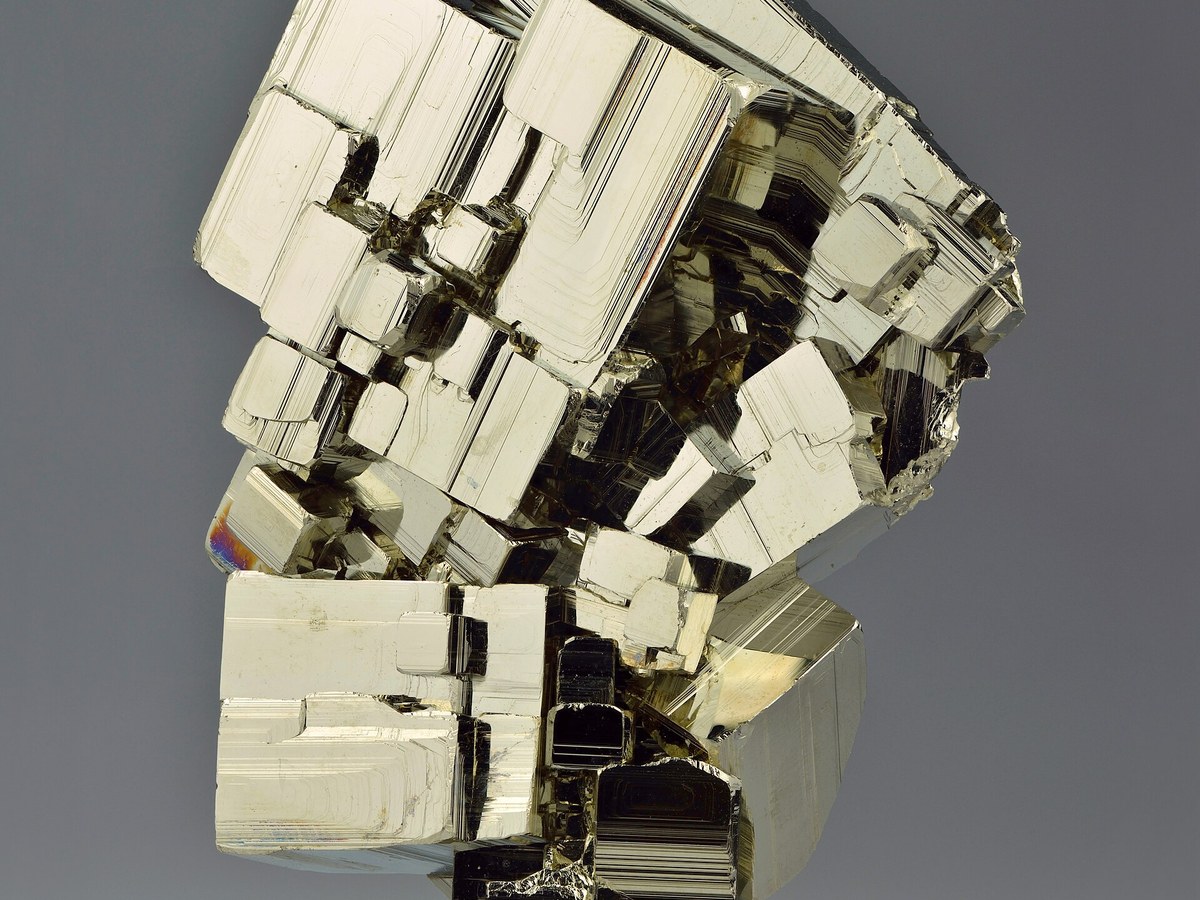
Fool's gold, cut into flawless brassy cubes.
Chakra
Solar Plexus · Sacral
Element
Fire · Earth
Zodiac
Leo · Aries
I. The Metaphysical Reading
How the stone has been held.
Pyrite is the classic stone of practical confidence — kept in tills, on desks and in workshops by people who want their effort to translate into something tangible. Practitioners work with it for follow-through rather than inspiration, and for keeping one's own resources firmly one's own.
- Chakra
- Solar Plexus · Sacral
- Element
- Fire · Earth
- Zodiac
- Leo · Aries
- Keynote
- Fool's gold, cut into flawless brassy cubes.
II. The Scientific Reading
What the lattice actually does.
Pyrite is iron disulfide and the most abundant sulfide mineral in the crust, forming striated cubes, pyritohedra and octahedra in hydrothermal veins, sedimentary rocks and coal. Its brassy colour and metallic lustre have fooled prospectors for centuries, but it is distinguished from gold by being brittle, far harder, and by leaving a greenish-black streak. In damp air pyrite oxidises to iron sulfates and sulfuric acid — the process behind acid mine drainage and behind 'pyrite decay' in museum specimens — so it should be stored dry and never soaked or worn in water.
- Formula
- FeS₂
- System
- Cubic (isometric)
- Hardness
- 6 – 6.5 (Mohs)
- Provenance
- Spain (Navajún, La Rioja), Peru (Huanzalá), Italy (Elba), China, USA
References & Sources
Independent mineralogical references used to verify the scientific details above.
Mineral Profile
Fact Sheet
- Chemical Formula
- FeS₂
- Crystal System
- Cubic (isometric)
- Mohs Hardness
- 6 – 6.5 (Mohs)
- Density
- 4.9 – 5.2 g/cm³
- Refractive Index
- Opaque (metallic; RI ~1.81 measured optically)
- Provenance
- Spain (Navajún, La Rioja), Peru (Huanzalá), Italy (Elba), China, USA
- Color Origin
- Pale brass-yellow with metallic lustre, often tarnished iridescent
Related Crystals
Stones that share this lattice
Next in the Atlas
Amethyst
The stone of tempered clarity.